Source Portable Digital Thickness Gauge for Paper Leather Rubber
Compare 30 portable digital thickness gauge options from verified Chinese manufacturers. Buyers can evaluate specifications like reading accuracy, material compatibility, and customization support to find the right tool for measuring paper, leather, rubber, and hair thickness.
Key considerations
Products List


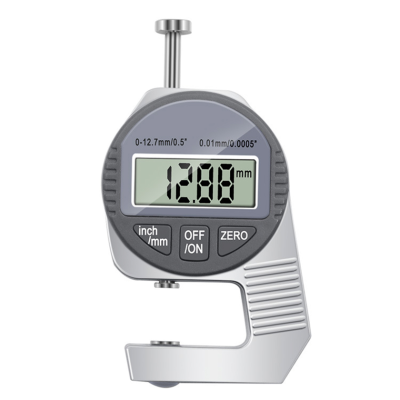


0.01mm Measure Thickness Instruments 200mm Handle Dial Digital Thickness Gauges
$234.50 - $273.50
Moq: 10


Comprehensive Sourcing Guide
Strategic Sourcing Guide for Portable Digital Thickness Gauges
The global demand for precision measurement tools has driven the market for portable digital thickness gauges to become a critical component in quality assurance workflows across manufacturing, construction, and material testing sectors. For procurement professionals, navigating this category requires a disciplined approach that distinguishes between generic specifications and verified product attributes. The following guide synthesizes observed market data and technical requirements to provide a robust framework for sourcing these instruments without relying on unverified claims or speculative data.
Technical Specifications and Performance Parameters
When evaluating portable digital thickness gauges, the primary focus must be on the instrument's measurement range, resolution, and display capabilities. The observed market data indicates a significant variance in technical specifications, suggesting that buyers must align their specific material requirements with the device's capabilities. A critical observation from current listings is the measurement range, which frequently spans from 0 to 25mm, though some industrial variants may extend to 0-30mm or 0-25mm depending on the throat depth design.
Resolution is another pivotal factor. High-precision applications often require readings down to 0.01mm, while general industrial use may accept 0.1mm increments. The display technology has largely standardized on LCD screens, ensuring readability in various lighting conditions. Furthermore, the physical construction of the gauge dictates its durability and portability. Materials such as Carbon Fiber Composite and Stainless Steel are prevalent, offering a balance between weight reduction and structural integrity. The weight of these units varies significantly, ranging from lightweight handheld devices weighing approximately 265g to heavier, more robust units approaching 100kg for specialized material testing machines.
Buyers should verify the graduation markings, which often support both Inch and Metric systems to accommodate international supply chains. The power source is another technical consideration; many portable units utilize Lr44 1.5V batteries, ensuring long operational life without the need for complex charging infrastructure. It is essential to confirm that the single package size aligns with logistical constraints, as dimensions can range from compact 7x5x5cm units to larger 49x26x22cm packages.
Compliance, Certification, and Standards Verification
In the B2B procurement landscape, compliance is not merely a formality but a prerequisite for market access and liability protection. The supplied data highlights a diverse array of certifications and standards, including CE, ISO, RoHS, and specific industry standards like ISO 534 and ISO 3034. However, it is crucial to treat these as observations of specific product listings rather than universal guarantees for all devices in the category.
Procurement teams must verify that the specific model number they intend to purchase carries the necessary certifications for their target market. For instance, while some listings indicate compliance with ISO standards, others may reference CE marking for European markets. The material standards, such as Stainless Steel, also play a role in compliance, particularly for applications requiring resistance to corrosion or chemical exposure. Buyers should request valid certification documents for the specific batch being ordered, as these documents are often model-specific and not transferable across different product lines.
Furthermore, the origin of the product influences the regulatory framework. Many observed products originate from China, specifically from regions like Hangzhou, Zhejiang, and the P. R. China generally. This geographic concentration suggests a mature supply chain but also necessitates rigorous due diligence regarding the specific factory's quality management systems. The presence of "Customized Support" and "OEM/ODM" capabilities indicates that suppliers may offer tailored compliance solutions, but these must be explicitly defined in the purchase agreement to ensure the final product meets the buyer's local regulatory requirements.
Cost Drivers and Pricing Structures
Understanding the cost structure of portable digital thickness gauges is essential for budgeting and total cost of ownership (TCO) analysis. The observed price range in the market is exceptionally broad, spanning from $2.40 to $1,200.00 USD. This variance is driven by several key factors, including the complexity of the measurement technology, the quality of materials used, and the level of customization required.
Low-cost units, often priced near the lower end of the spectrum, typically feature basic LCD displays, standard battery power, and simpler mechanical designs. These are suitable for general inspection tasks where extreme precision is not the primary concern. Conversely, high-end units approaching the upper price limit likely incorporate advanced digital sensors, enhanced durability features, and specialized software integration. The material composition, such as the use of Carbon Fiber Composite versus standard plastics, also significantly impacts the cost.
Minimum Order Quantity (MOQ) is another critical cost driver. The market data shows an MOQ range from 1 unit to 1,000 units. For small-scale procurement, buyers may face higher per-unit costs due to the lack of volume discounts, whereas bulk orders can significantly reduce the unit price. Packaging details also influence costs; options like "Wood Package, Free-Fumigation" or "Solid Plastic Box" add to the overall expense but are necessary for international shipping and compliance with phytosanitary regulations. Buyers must calculate the total landed cost, including shipping, insurance, and potential tariffs, rather than focusing solely on the unit price.
Typical Applications and Industry Use Cases
The versatility of portable digital thickness gauges makes them applicable across a wide spectrum of industries. The primary function of these devices is to measure the thickness of various materials, including paper, leather, rubber, and hair. This broad applicability requires buyers to select a gauge that matches the specific material properties of their production line.
In the paper manufacturing industry, gauges with a reading resolution of 0.01mm are often required to ensure consistent product quality. Similarly, in the leather and rubber industries, the ability to measure non-uniform surfaces is crucial. The "Material Testing Machine" category, which includes some of the heavier units observed, suggests applications in heavy-duty testing environments where structural integrity and material strength are paramount.
The "Usage" attributes listed in the data, such as measuring thickness for paper, leather, rubber, and hair, indicate that these tools are not limited to a single sector. They are equally valuable in the textile industry for fabric thickness assessment and in the automotive sector for coating and lining measurements. The "Throat Depth" specification, ranging from 0-30mm, further expands the application scope, allowing for the measurement of curved or thick objects that cannot be accommodated by standard flat-surface gauges.
Supplier Evaluation and Customization Capabilities
Selecting the right supplier is as important as selecting the right product. The market data reveals a high degree of customization availability, with many suppliers offering OEM, OBM, and ODM support. This flexibility allows buyers to brand the devices as their own or request specific modifications to meet unique operational needs. However, the presence of customization options does not guarantee quality; it merely indicates the supplier's capability to adapt their production lines.
Buyers should evaluate suppliers based on their ability to provide detailed product specifications, including the specific model numbers like Colo-8856FN, PN-PT6D, and TG03. These identifiers are crucial for tracking the exact product version and ensuring consistency in future orders. The "Customized Support" attribute suggests that suppliers are willing to work with buyers on specific requirements, but the scope of this support must be clearly defined in the contract.
Additionally, the origin of the supplier, such as Hangzhou, Zhejiang, or P. R. China, provides insight into the supply chain's maturity. Suppliers in these regions often have established logistics networks and experience with international trade compliance. However, buyers must verify the supplier's track record regarding delivery times, after-sales support, and the ability to handle complex packaging requirements like "1 PC/Plastic Box 50 PCS/CTN" or "100PCS/Outer Carton."
Quality Control and Long-Term Procurement Considerations
Ensuring consistent quality is a continuous process that extends beyond the initial purchase. The observed data includes various packaging details, such as "Plastic Box" and "Wood Package," which serve as the first line of defense against damage during transit. However, internal quality control measures within the supplier's facility are equally important. Buyers should request evidence of in-process quality checks and final inspection reports before accepting delivery.
Long-term procurement considerations include the availability of spare parts, calibration services, and the lifespan of the device. The battery type, such as Lr44 1.5V, is a standard component that should be easily replaceable, but buyers must verify the availability of these batteries in their region. Furthermore, the "Single Gross Weight" and "Single Package Size" data points are essential for planning storage and logistics over the life of the contract.
Buyers should also consider the potential for obsolescence. As technology evolves, the digital interfaces and sensor technologies in thickness gauges may become outdated. Selecting a supplier with a strong R&D capability and a history of product updates can mitigate this risk. Finally, the "Customization" and "Customized Support" attributes offer opportunities for long-term partnerships, where the supplier can evolve the product line in response to changing market demands and technological advancements.
Conclusion
Sourcing portable digital thickness gauges requires a meticulous approach that balances technical specifications, compliance requirements, and cost considerations. By leveraging the observed market data and adhering to strict verification protocols, procurement professionals can identify suppliers that deliver high-quality, reliable measurement tools. The broad range of available models, from lightweight handheld devices to heavy-duty material testing machines, offers solutions for virtually any application. However, the key to success lies in the careful evaluation of each product's specific attributes, ensuring that the selected gauge meets the precise needs of the buyer's operations while maintaining compliance with all relevant standards and regulations.
FAQs
What certifications do portable digital thickness gauges typically have?
Many units carry CE, ISO, and RoHS certifications for market compliance. Specific models may also meet industry standards like ISO 534 or ISO 3034. Buyers must verify these documents for the exact batch ordered as certifications are often model-specific.
Which measurement range is standard for these digital gauges?
The standard measurement range frequently spans from 0 to 25mm for general applications. Some industrial variants offer a throat depth up to 0-30mm for thicker materials. Select the device based on the specific thickness of your target materials.
How much do portable digital thickness gauges cost?
Prices vary significantly from 2.40 to 1200 USD depending on features. Low-cost units often have basic LCD displays while high-end models include advanced sensors. Material quality like carbon fiber or stainless steel also influences the final price point.
Can suppliers provide customization for these measurement tools?
Yes, many suppliers offer OEM, OBM, and ODM customization support. Buyers can request specific branding or technical modifications to meet unique operational needs. This support must be explicitly defined in the purchase agreement to ensure the final product meets requirements.
What is the typical minimum order quantity for these gauges?
The minimum order quantity ranges from 1 unit to 1000 units depending on the supplier. Some vendors require a bulk order of 50 pieces for specific models. Buyers should calculate total landed costs including shipping when planning their order volume.
Where are these portable digital thickness gauges manufactured?
Most observed products originate from China, specifically regions like Hangzhou and Zhejiang. The geographic concentration suggests a mature supply chain with established logistics networks. Buyers should verify the specific factory's quality management systems regardless of the origin.
How is the reading resolution determined for these devices?
Resolution varies between 0.1mm for general use and 0.01mm for high-precision applications. The display technology typically uses LCD screens for readability in various lighting conditions. Choose the resolution that matches the precision requirements of your specific material testing workflow.